
Sustainability in action: UNSW celebrates innovation at the SDG Showcase
2025-10-29T13:30:00+11:00

Dozens of UNSW initiatives that are driving progress towards achieving the UN's SDGs were on display.
Photo: Katherine Griffiths for UNSW

From solar cars to seawall restoration, UNSW Sydney’s SDG Showcase highlighted the people and projects transforming ideas into solutions for a better future.
Students, staff, alumni and partners from industry and the wider community gathered at UNSW Sydney this week for an interactive showcase highlighting the University’s leadership in sustainability and innovation.
More than 60 exhibitors shared stalls, short talks, presentations and hands-on demonstrations - giving participants a practical look at how UNSW is driving change through the UN’s Sustainable Development Goals (SDGs), a global blueprint of 17 targets for peace, prosperity and planetary wellbeing.
A range of groundbreaking projects were on display, including the living seawalls initiative, world-first plastic waste recycling, climate risk response strategies and electric cargo drones.
The showcase offered a rare opportunity for the community to meet the experts behind UNSW’s world-leading work, learn how their research is making a difference, and explore ways to get involved.
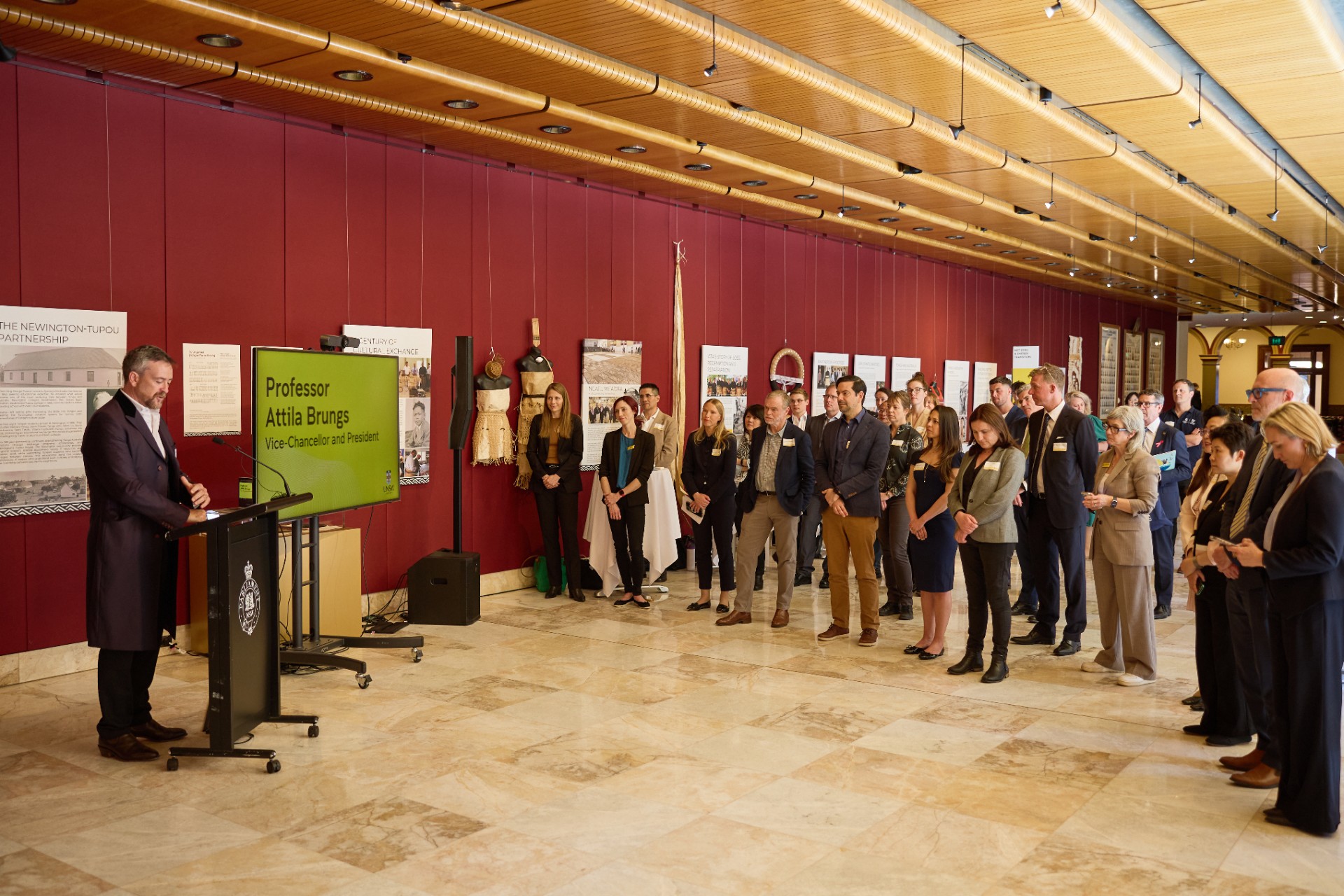
UNSW Vice-Chancellor and President Professor Attila Brungs praised the ingenuity of researchers at the showcase. “It is wonderful to see our community come together to highlight the creativity, passion and expertise of our students and staff,” Prof. Brungs said.
“As a global leader in sustainability, UNSW is tackling some of society’s greatest challenges through research and innovation - and that begins right here on campus. I’m constantly inspired by the groundbreaking work happening across our community. We are empowering the next generation of leaders to accelerate the transition to a sustainable future.”

CEO of the Australian Council of Social Service Dr Cassandra Goldie speaking at the UNSW SDG Showcase. Photo: Katherine Griffiths for UNSW

Attendees met UNSW researchers leading initiatives to achieve the SDGs. Photo: Katherine Griffiths for UNSW

UNSW's Sunswift 7 solar-powered car on display. Photo: Katherine Griffiths for UNSW

Students, staff, researchers and community members joined the SDG Showcase at the Roundhouse. Photo: Katherine Griffiths for UNSW
Collaborating to achieve global goals
The event emphasised the importance of interdisciplinary collaboration across business, science, health, design and social policy, strengthening pathways to sustainability.
Attendees explored how diverse research areas connect to the SDGs - from co-designing neurodiverse public spaces with experts from the City Futures Research Centre to shaping ethical global supply chains with the Australian Human Rights Institute.
Reducing poverty and inequality was also a key focus at the showcase. UNSW Vice-President, Societal Impact, Equity & Engagement, Professor Verity Firth, led a panel discussion with the CEO of the Australian Council of Social Service (ACOSS), Dr Cassandra Goldie. ACOSS has partnered with UNSW to drive research and develop better welfare solutions.
Earlier this month, an ACOSS report revealed 1 in 7 Australians were living in poverty. Dr Goldie urged the Government to raise social security payments.
“We are seeing an increase in the level of poverty in Australia,” she said. “Many people are having to choose - how many times can I feed myself today, and what can I buy? I think the student population lives that reality a lot.
“At ACOSS, as the peak body for the community sector for people facing poverty and disadvantage, we actually use the SDG framework to hold ourselves to account.”

Future-focused research on display
Artificial intelligence is transforming how we pursue sustainability, offering powerful tools to drive innovation. But its rapid evolution also brings complex questions around ethics, bias, regulation and the future of work.
Scientia Professor of AI and Chief Scientist at the flagship UNSW AI Institute Toby Walsh said AI could be a double-edged sword.
“A lot of people are concerned about the environmental impact of AI but on the other side of the ledger, every one of the 17 SDGs - you can name work that's going on to use AI to help us address those challenges,” he said.
“There are plentiful ways in which AI is being used to live on the planet in a more sustainable way to address some of the great issues that we have in terms of disease and climate … I can see a time in the not-too-distant future where most of the cancers of the world have been solved.
“But it is worrying to think that the world we will see, read and hear is the world that's been chosen for us by AI algorithms. That's why universities will continue to have important roles, to give people the critical appreciation to understand those choices and that there are other ways to see the world, other answers to these questions that the AI is not necessarily giving.”
A global leader in sustainability
UNSW is ranked 11th in the world for impact and sustainability, reinforcing its position as a global leader in driving solutions to the planet’s most pressing challenges.
The University’s strongest performance for 2025 was in environmental areas:
- third in the world for Climate Action (SDG 13)
- seventh for Responsible Consumption and Production (SDG 12)
- 11th for Life on Land (SDG 15).
Prof. Firth said UNSW was proud to be leading sustainability initiatives that have a global reach.
“It’s incredibly rewarding to be able to see first-hand the collaboration and innovation happening at UNSW. Our students, staff and partners are driving real progress towards a better future,” Prof. Firth said.
“The SDG Showcase is a powerful opportunity to be challenged, to be inspired, to see, experience and interact with the world-leading work happening every day here at the University.”
We are empowering the next generation of leaders to accelerate the transition to a sustainable future.




Media enquiries
For enquiries about this story and interview requests please contact Ashleigh Steele:
Tel: +61421308805
Email: ashleigh.steele@unsw.edu.au