
Advocacy Lab

The Advocacy Lab brings students, researchers and community organizations together to advance better public health policy.
Our mission is to build students’ confidence, capacity, and courage to act for health equity.
The Advocacy Lab is an Australia first strategic initiative at UNSW’s School of Population Health.
Recent events
-
Climate change is set to shape life trajectories in profoundly unequal ways, amplifying privileges for some while deepening social and economic disadvantage for many. How can we embed an equity-lens in public health responses to our changing climate?
On March 5, 2026, students joined Emma Bacon from Sweltering Cities, Dr Kim Loo from Doctors for the Environment, Kristin O’Connell from the Antipoverty Centre, John Swain from City of Sydney Homelessness Services, Ed Jegasothy from the School of Public Health at Sydney University and Fiona Haigh from UNSW.
We examined the systemic and policy challenges of responding to extreme heat, smoke exposure, climate-related disasters, and other conditions driven by climate change. We explored opportunities for the Advocacy Lab’s future work in advancing more socially just approaches to climate adaptation.
Event Highlights | Equity at the HeartClimate Panel | Equity at the Heart
Campaigns
Advocacy Lab campaigns involve a range of activities, including practical workshops and events with our community partners.
Our current campaigns:
- Peace and public health
- Health in a changing climate
- Harm minimisation

-
Laura Bathie was one of the team invited to present evidence to the House Standing Committee on Health, Aged Care and Sport in March 2026. Rachel caught up with Laura to ask about her experience.
Rachel Rowe: Was this your first time presenting as part of a government inquiry? How did the invitation come about?
Laura Bathie: Yes, it was my first time. About a year earlier, I participated in making a submission to the Federal Inquiry into the health impacts of alcohol and other drugs. The Advocacy Lab later received an invitation to present at a hearing for the Inquiry. We were invited to present alongside two leading national research centres, the National Drug and Alcohol Research Centre and the Drug Policy Modelling Program - both at UNSW.
R: What steps did you take to prepare?
L: With two other students representing the Advocacy Lab, we re-read our 2024 submission to reorient ourselves with the Inquiry’s TORs and the recommendations we made. We read the submissions of leading organisations and research centres, and considered where we, as public health students would be particularly well- placed to contribute. I researched the MPs on the Committee to understand their backgrounds and interests, and read information about what to expect when attending an inquiry as an expert witness. These points were discussed among the team and we developed a document to refer to on the day, which included an opening statement and the key points we wanted to address.
R: We were able to refer to your own research on alcohol advertising and regulation in the hearing. How did that feel?
L: It was exciting! The opportunity to present your research directly to parliamentarians, who have specifically asked for your input, is rare! Often government inquiries precede policy change and research presented in government inquiries is drawn upon, so it felt like an important opportunity to demonstrate how my research could contribute to informing policy change.
R: What did you learn from the experience?
L: I learnt the importance of having key take-home messages and presenting clear recommendations that are within the jurisdiction of those conducting the Inquiry to implement. I also saw how sharing real-life experiences and stories can be persuasive in communicating your point.
R: What was the most rewarding thing about participating?
L: It was a new way to experience the democratic process (e.g. other than voting) which allowed for more nuance in the expression of your ideas, concerns and priorities. I valued the discussion: not just presenting your research and experience, but also answering questions in ways that seek to strategically influence policy.
 (L-R: Laura Bathie, Amy Leahy, Fiona D’mello presenting at the Federal Inquiry, March 2026) Advocacy Lab | UNSW Sydney
 -
Students of PHCM3007 Applied Public Health Practice, UNSW Bachelor of Public Health (BPH), Dr Kristen Beek and Dr Kate Da Costa of Wesley Mission worked together to create communications tools that build on Wesley Mission’s Put Pokies in Their Place campaign.


-
Close me
By Leslie Copland
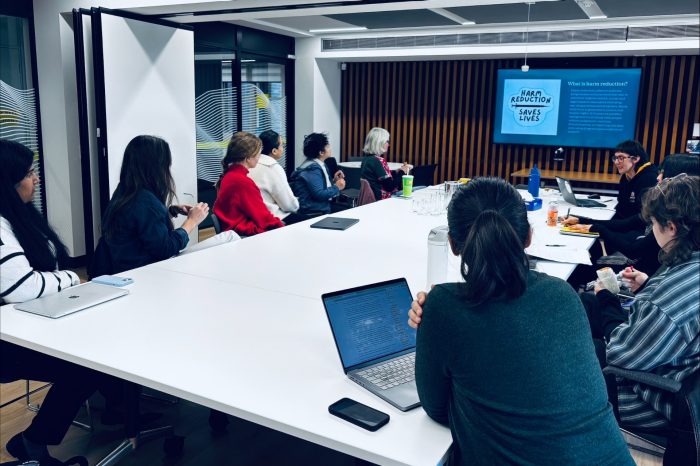
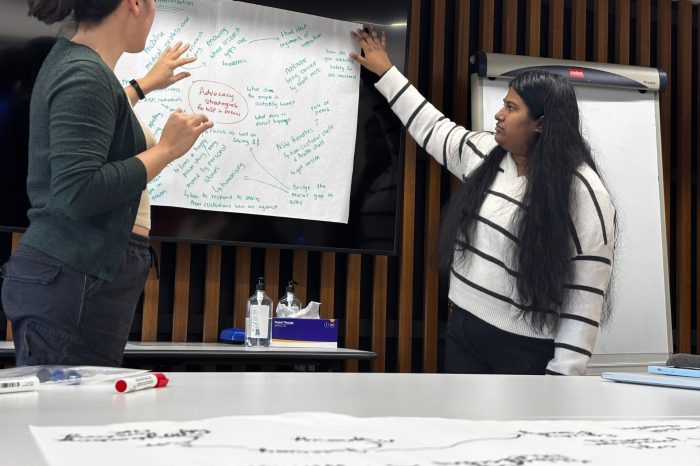
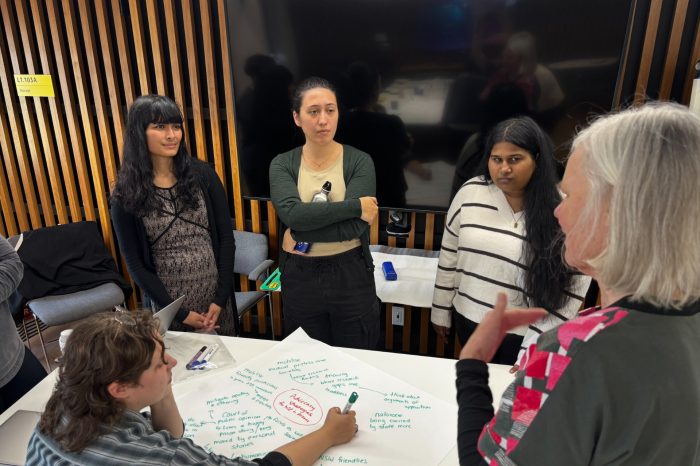
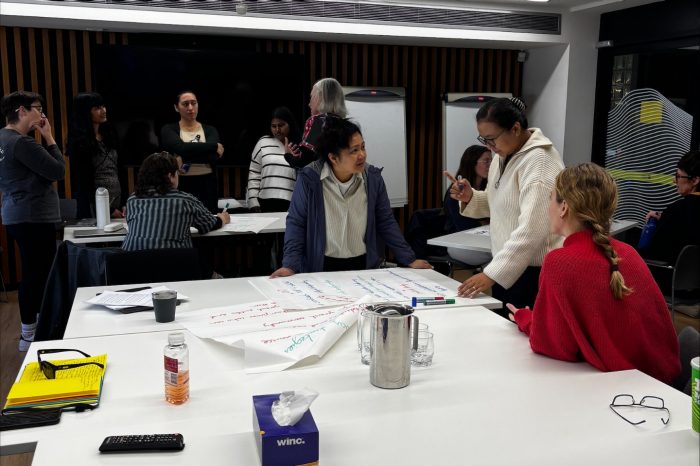
In July, students joined members of the Harm Reduction in Prisons Working Group and leading Australian drug policy researchers, Professor Alison Ritter and Dr Liz Barrett. This Advocacy Lab workshop involved a presentation of the campaign for injecting-related harm reduction interventions in Australian prisons, including stakeholder analysis. The workshop then brainstormed strategies and tactics to support the introduction of Needle & Syringe Programs in prisons.
As a group of postgraduate and undergraduate students from diverse professional and personal backgrounds, it was a brilliant opportunity for us to engage in real-world advocacy. This is an area of policy where Australia’s human rights obligations to people in prison are not being met. Even though there is strong support for policy change among public health actors, and specifically alcohol and drug organisations, the social and political barriers to harm reduction in prisons call upon us to think outside of the box. Our brainstorming activity resulted in a list of possibilities, opportunities, and ideas to refresh the ongoing campaign.
The Advocacy Lab thanks Alison and Liz for their generous leadership. We look forward to ongoing collaboration.
-


Events
We bring together people with purpose. Our events include:
- Showcasing stories of successful campaigns
- Panels with leading public health advocates
- Media and storytelling training
- Networking with peak associations
-
In April, 2025, the Advocacy Lab was launched with a panel discussion with three powerhouse public health advocates – including recipients of City of Sydney Community Recognition Award (2024) and the Nobel Peace Prize (2017). Erin Longbottom Nurse Unit Manager of St Vincent’s Homeless Health, Rada Germanos a local GP and Protect Our Water Alliance co-founder, and Ruth Mitchell chair of the International Physicians for the Prevention of Nuclear War (IPPNW) shared stories of their advocacy to improve housing security and non-resident access to healthcare, and to curb the health impacts of climate change, nuclear weapons testing and waste. With backgrounds in nursing, general practice and paediatric neurosurgery, the panel discussed how their training in medicine and health fostered their passions for social justice and equity. The panel shared their insights about getting started in advocacy, how to talk to media and persuade policymakers, build trust when working with marginalised communities and uphold values of integrity, honesty and equity.
-
-
Before the 2025 Federal Election, the Public Health Association of Australia (PHAA) presented its “Vote for Public Health” at the School of Population Health. In this video, PHAA CEO, Adj Prof Terry Slevin presents the 7 areas of action recommended to all political parties and candidates. These include increasing the budgets for prevention and for Indigenous health initiatives, committing to a suite of measures to regulate the food industry as well as the influence of the gambling industry, implementing policies that address the drivers of climate change, establishing an independent Australian Centre for Disease Control by the end of 2025, and providing public dental and oral healthcare under Medicare.


News and publications
Legendary advocacy work often happens behind the scenes. When our work is in the spotlight, you can read about our achievements and impact here.
-
In December 2024, the Advocacy Lab piloted its first submission workshop with a fantastic team of SPH postgraduate students. An expression of interest process, culminated in a 3-hour submission workshop. The workshop trained students in best practice submission writing, and workshopped the issues that the team were passionate and knowledgeable about. We would like to thank Dr Sally Nathan for providing expert review of the final submission. Congratulations to the team and to team leader Rachel Rowe. You can view submissions to the Inquiry, including ours below.


Get involved
Join us to make meaningful change on urgent public health issues. Make lasting connections while making a world where everyone has the right to health.
Contact us for more information.
What students are saying
"While advocacy has been part of my professional background, this experience offered a fresh and practical perspective. It also allowed me to engage with international best practices and critically reflect on the systemic barriers and diverse stakeholder positions that influence public health reform in Australia."
"This helped me better understand the need for nuanced, strategic advocacy, and the importance of designing actionable and inclusive advocacy strategies."
"It made me excited to brainstorm with others and genuinely work on ideas for addressing what is a complex issue, and I think that excitement was generally shared. I also liked how all of our ideas were valued during the process."
Student interviews
Ad-Lab Director Rachel Rowe sat down with students involved in the Advocacy Lab to hear about their experiences, from writing government submissions to tackling complex public health issues. Read their interviews below:

